


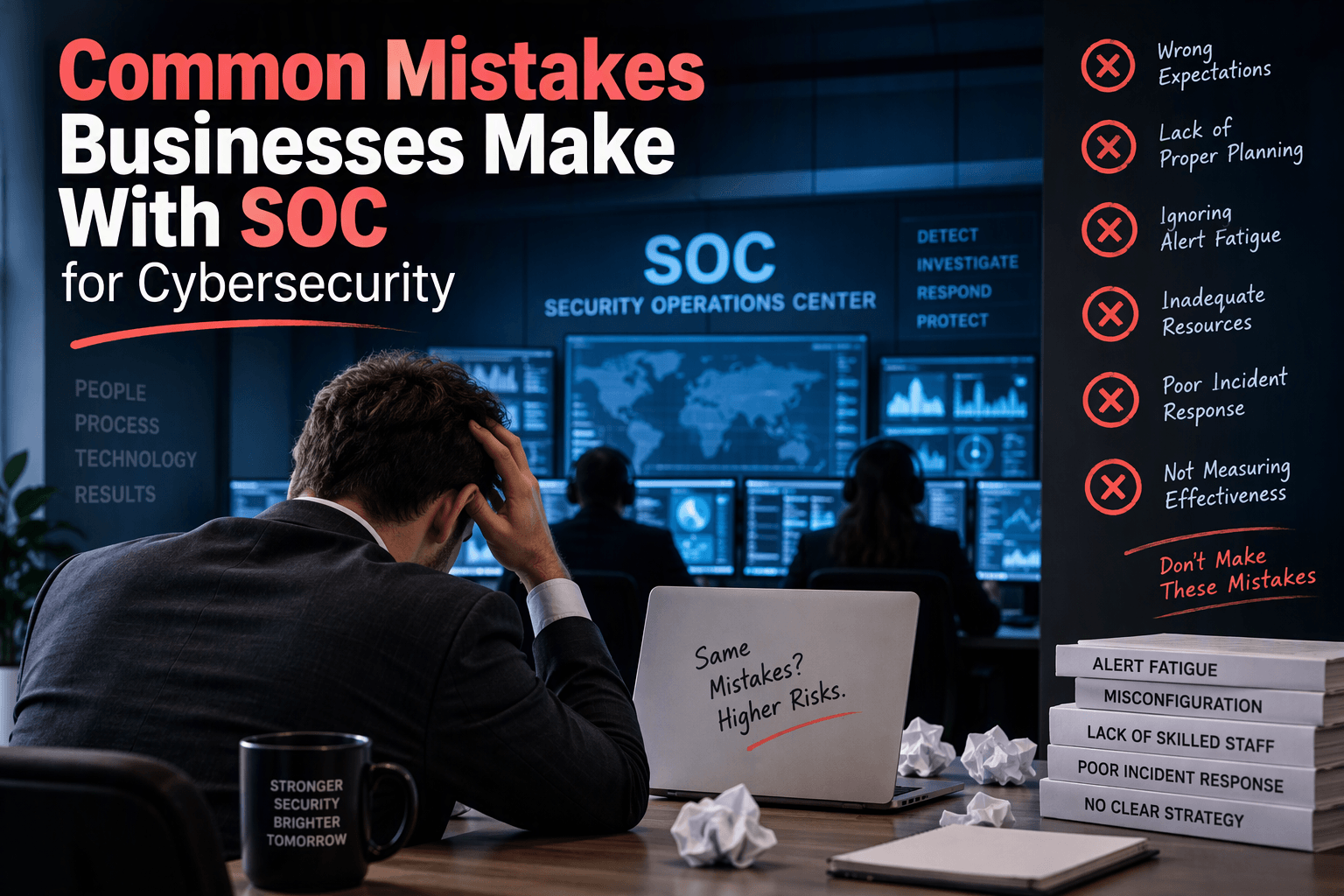
Many companies put real time into cybersecurity assurance and still end up with a report that doesn’t answer the questions asked. The problem often isn’t effort. It’s confusion about what SOC for Cybersecurity is meant to do and who it’s for.
Expecting a pass/fail certificate
A lot of teams go into the process because they want a clean certificate they can hand to customers. That expectation creates trouble from the start. SOC for Cybersecurity isn’t a certificate and there’s no passing grade.
It’s an attestation engagement performed by a CPA firm under AT-C 205. Management first makes an assertion about its cybersecurity risk management program. Then the CPA gives an independent opinion on two points: whether management’s description is fairly presented, and whether controls were suitably designed and operating effectively to meet the stated cybersecurity objectives.
The examination uses description criteria and suitable control criteria, such as relevant AICPA Trust Services Criteria. Findings can affect the CPA’s opinion, so the report should be read as a whole rather than reduced to a pass/fail label. Management needs to understand what any exceptions mean for the program and its stakeholders.
What to do instead: use weaknesses to guide improvements. Document what’s in place and tie fixes to dates and owners. Note where controls are still maturing and review progress monthly.
Confusing it with SOC 2 or a security team
The name causes real confusion. SOC here doesn’t mean security operations center. A security operations center is the team and tooling that monitors alerts day to day.
System and Organization Controls reporting is a separate AICPA family. SOC 1 covers financial reporting controls. SOC 2 covers controls for a defined system.
SOC 2 is often requested during third-party risk management when a customer evaluates a SaaS or cloud provider. Its focus is that defined system. SOC for Cybersecurity examines how a defined program manages risk, from governance through the operation of its controls.
For a plain breakdown of how the AICPA framework is structured, this explainer on soc for cybersecurity lays out the pieces without extra jargon. NIST guidance can help shape controls, while the examination tests whether the program description holds up.
Penetration tests and vulnerability scans check specific weaknesses at a point in time. They don’t give an opinion on the full program. What to do instead: start with who needs what. If a prospect wants proof about a hosted system, they likely need SOC 2. If directors want a view of the risk management program itself, SOC for Cybersecurity fits better.
Drawing the boundaries without saying so
Another mistake is vague scoping. Some reports imply they cover everything when they only looked at part of the environment. Others bury exclusions in footnotes that readers miss.
The framework allows reports to cover an entity-wide program or a narrower boundary. A divisional program is one option. Another clearly defined program can also work when the boundaries are stated.
That flexibility is useful. A large company might start with one division that holds sensitive systems, while a smaller provider might cover the full entity because operations are fully centralized.
What to do instead: name what’s in and what’s out. List covered systems and sites, and state reliance on subservice providers clearly.
Rushing the management description
Management’s description is the center of the report. It explains the program and the controls meant to meet its cybersecurity objectives.
A description written like marketing copy can omit information readers need. Broad claims about strong security are less useful than an explanation of how risks are identified and how incidents move to closure.
The AICPA description criteria call for precision. Each statement should tie to evidence an examiner can check.
What to do instead: build the draft from records, not memory. Pull policy versions with approval dates. Gather risk registers along with related review notes. Include monitoring logs and recent incident tickets for review. If a claim has no evidence behind it, rewrite the claim or fix the control.
Keeping the board out and letting the report go stale
If only IT or compliance owns the work, the result shows it. The report reads as a technical checklist. Governance gets a passing mention, while risk appetite is missing.
Readers may include directors, audit committee members, customers, and other stakeholders. They need more than tool settings: they need to understand who is accountable for risk decisions and how significant issues reach leadership.
Risk doesn’t stand still. New systems arrive and vendors change. Attack methods shift too. A report left on a shelf loses value fast.
That doesn’t mean the framework demands a fixed yearly exam. Without monitoring and follow-through, the assurance fades.
What to do instead: give leadership a clear role. Have risk owners brief the board on results. Track findings to closure and report progress. Pair any examination with ongoing monitoring, and agree on the timing of future examinations based on stakeholder needs and changes in risk. This keeps preparation connected to daily oversight.
Boards don’t need perfect security. No report can promise that, and SOC for Cybersecurity doesn’t replace duties that apply in regulated work like healthcare or financial services. They need a clear view of how risk is managed and what comes next. Teams that avoid these mistakes give them exactly that.