




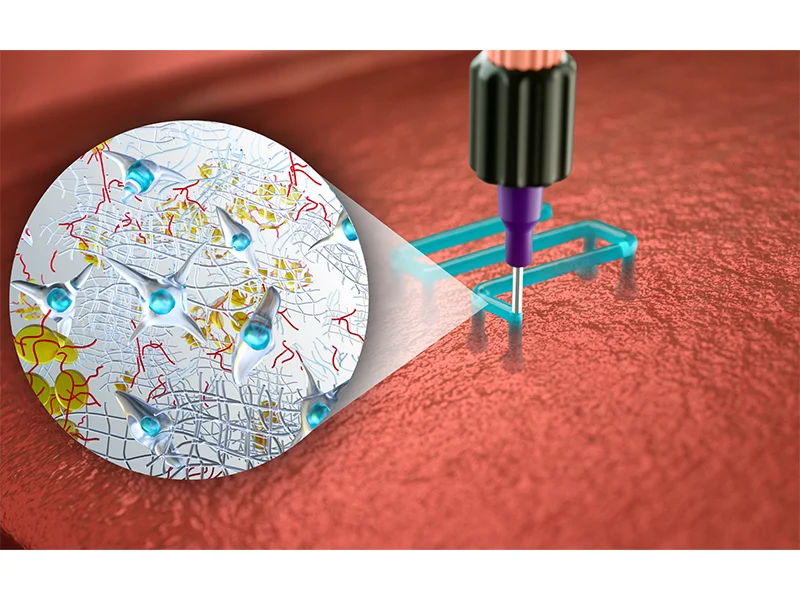
As scientific knowledge expands at an unprecedented pace, the challenge of making complex information understandable becomes increasingly urgent. Researchers today deal with multidimensional data, abstract theories, and systems that operate far beyond direct human perception. In this context, science illustrations and animations are not just supportive tools—they are essential components of how science is communicated, taught, and applied.
By transforming data into structured visual narratives, these tools bridge the gap between complexity and comprehension.
The Function of Science Illustration in Modern Research
Science illustration https://scientific-illustrations.com serves as a method of visual reasoning. It is not merely about depicting objects, but about organizing information in a way that reveals relationships and meaning. Illustrators collaborate with scientists to interpret data and convert it into visuals that emphasize structure, hierarchy, and function.
Unlike photographs, which often present too much uncontrolled detail, illustrations are designed with intent. They simplify without distorting, focusing attention on critical elements. For example, in molecular biology, an illustration might highlight specific protein interactions while omitting surrounding noise. In engineering or physics, diagrams can represent forces, flows, or systems that cannot be directly observed.
This selective clarity makes illustrations particularly valuable in research communication. Complex findings can be distilled into diagrams or graphical abstracts that allow readers to quickly grasp the essence of a study.

Animations: Understanding Through Motion
Many scientific processes cannot be fully understood through static images. They involve sequences, feedback loops, and interactions that evolve over time. Science animations address this by introducing motion, allowing viewers to observe how systems behave dynamically.
For example, animations can demonstrate how ecosystems respond to environmental changes, how chemical reactions progress, or how energy moves through physical systems. These visualizations make abstract processes tangible and intuitive.
Animations are especially powerful in education. When learners can see how a process unfolds step by step, they develop a deeper and more lasting understanding. Motion helps clarify causality, showing not just what happens, but how different elements influence one another https://scientific-illustrations.com/portfolio/animation.
In research, animations are often used to present simulations or predictive models. They allow scientists to communicate complex scenarios in a format that is easier to interpret than raw data or equations.
Cross-Disciplinary Applications
Science illustrations and animations are used across a wide range of disciplines:
Biological Sciences
They reveal structures and processes at the cellular and molecular levels, making invisible systems understandable.
Physical Sciences
Visualizations explain abstract concepts such as forces, energy transfer, and particle interactions.
Environmental Science
Animations illustrate climate dynamics, ecological relationships, and long-term environmental changes.
Astronomy
Artists create visual representations of cosmic phenomena that cannot be directly captured, based on scientific data and models.
Education and Outreach
Visual tools are essential for engaging students and the public, making science accessible and relevant.
Enhancing Data Communication
In the age of big data, scientists must communicate increasingly complex datasets. Visual tools play a critical role in this process. Well-designed illustrations and animations can reveal patterns, trends, and anomalies that might be difficult to detect in raw numerical form.
Data visualization has become a central part of scientific communication, often integrated with illustration and animation techniques. Interactive visuals allow users to explore data from different perspectives, leading to deeper insights.
These approaches not only improve understanding but also support decision-making in fields such as environmental policy, healthcare, and engineering.
Technological Innovation in Visualization
Advances in technology are rapidly transforming the field of scientific visualization. Three-dimensional modeling enables the creation of detailed and accurate representations of complex systems. These models can be explored, manipulated, and animated to reveal internal structures and interactions.
Virtual reality (VR) and augmented reality (AR) technologies are opening new possibilities for immersive learning. Users can step inside a molecule, explore a virtual ecosystem, or interact with a physical simulation in real time.
Artificial intelligence is also beginning to influence the field by assisting in data processing and visualization generation. AI-driven tools can help convert large datasets into visual formats more efficiently, enabling faster and more scalable production.
Interactive platforms further enhance engagement by allowing users to control variables and observe outcomes, turning visualization into an active learning experience.
The Collaboration Between Science and Design
Effective science illustrations and animations require close collaboration between scientists and visual designers. Scientists provide the data and ensure accuracy, while designers apply principles of composition, color, and motion to make information clear and accessible.
This collaboration ensures that visuals are both scientifically valid and user-friendly. The goal is to create representations that communicate efficiently without oversimplifying critical details.
Science illustrations and animations are fundamental to how knowledge is shared in the modern world. They transform complexity into clarity, enabling researchers to communicate discoveries, educators to teach effectively, and the public to engage with scientific ideas.
As scientific challenges become more complex, the importance of visual communication will continue to grow. By integrating accuracy with thoughtful design, science illustrations and animations will remain key tools for making knowledge not only available, but truly understandable.