




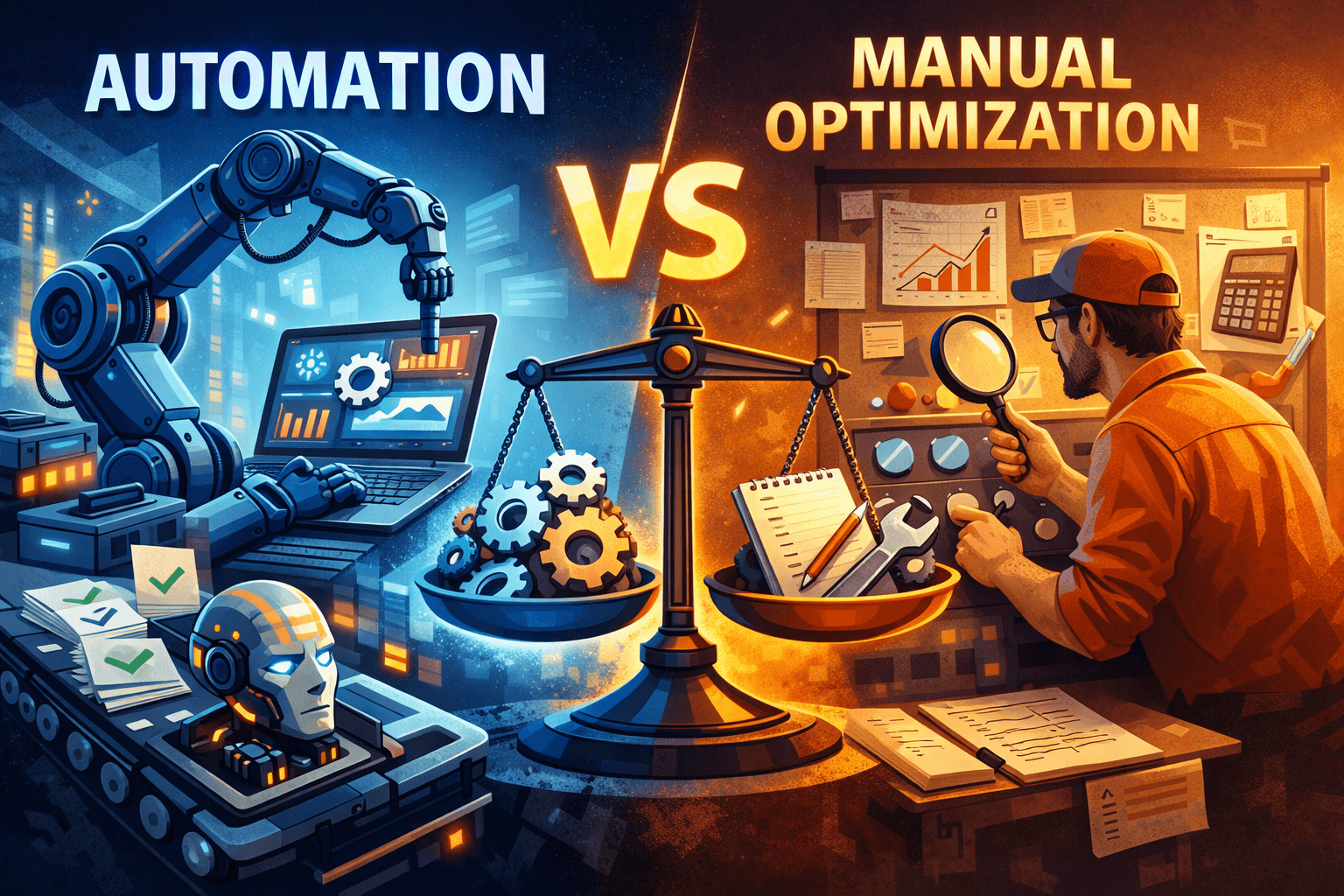
Automating repetitive tasks is an effective way to save time and reduce errors, but when it comes to making strategic decisions that impact results, the human touch is indispensable. The key is to strike a balance between automation and human decision-making.
Automation as the scout, human as the strategist
Consider your SEO workflow as having two parts. The first part involves collecting data such as crawling pages, monitoring keyword positions, pulling backlink profiles, and identifying technical errors. This can all be automated. The second part involves making decisions based on this data, determining what needs to be fixed first, and deciding how to create content that can gain trust. These are areas where human intervention is necessary.
This separation is important from a practical standpoint. Once you know which part of the workflow each task belongs to, you will no longer spend your valuable time on tasks that can be automated, and you will not rely on software for making decisions that require human input.
Where automation genuinely earns its keep
Rank tracking is perhaps the most obvious example. You’re not going to enjoy manually checking daily keyword movements across hundreds of URLs – it’s the sort of high-volume, painstaking administrative task that the machines excel at. Equally, you’re probably not going to enjoy doing manual weekly site crawls. But that’s not the job; finding and fixing the content, technical issues, and strategic challenges exposed by those weekly crawls is the job.
Backlink prospecting is another area where automation can make the best of a bad situation. Use filters to automatically surface promising domains based on authority, relevance, or spam metrics. What you can’t automate is the email. Seriously, your cold-template pitch for a link opportunity doesn’t sound any more personal than my cold template response. And guess what, your email is going to get cold-shouldered just like mine.
Core Web Vitals monitoring is no different. You’re probably going to need to use a tool like PageSpeed Insights to automatically measure your site’s Largest Contentful Paint and Cumulative Layout Shift at regular intervals. But fixing those scores almost certainly involves a lot of manually intensive development work – it’ll be the job of the developer, not the tool-wielder. For sites that keep developers busy, the tools will only serve to highlight the manual labor that lies ahead.
Where human judgment is non-negotiable
User intent is a great example of an unsolvable problem for tools. A tool can tell you that “content marketing strategy” has a lot of volume. A tool can’t tell you if the person searching that term wants a 2,000-word guide, a downloadable template, a quick answer, a definition, or a list of agencies. You determine that by looking at the live SERPs yourself – what’s already showing up, what type of content the current results are in, what questions they are answering. This takes maybe 20 minutes per keyword cluster, and it decides if the page you make matches what Google already thinks the query deserves.
Another one is keyword cannibalization. A tool can raise a flag that hey, these three pages on your site seem to be targeting terms that overlap. A tool won’t answer which of these you should consolidate into, how you should 301 the other pages, or if the overlap even matters based on the history of traffic to each page. That’s strategic work, and it takes a human familiar with how your content fits together on the site.
E-E-A-T – Experience, Expertise, Authoritativeness, and Trustworthiness – is largely a manual contest. You can’t cheat your way into proving you genuinely are an expert. First-person accounts, original research, author identity, editorial guidelines: all of it must be created and maintained by human work. This collection of useful seo guides covers this ground in the sort of detail that speaks to what is required when building content that reads as authoritative rather than just completed with keywords.
The trap in automated audit recommendations
This is often where teams bleed time. Technical SEO tools are designed to find things wrong with your site – that’s their reason for being. But not every issue they raise will have a material impact. Missing meta description for paginated archive, resources blocked by robots that aren’t blocked by rendering, redirect chains in place for perfectly logical reasons: you’ll see these in every audit report ever. And if you start work on everything, you’ll struggle to make meaningful progress on program-level work.
The muscle memory to develop is a process of running every item through the filter, “does this actually impact how Google crawls, indexes, or ranks this content?” If the answer isn’t immediately, unequivocally yes, it’s probably work that should be pushed to the bottom of a low priority queue, instead of taking the slot of some other work all your stakeholders are convinced is vital to your success. Over 70% of marketers use some form of marketing automation (HubSpot), but the most consistent challenge reported is connecting automated output to a cohesive, coherent human strategy – exactly where your priority process falls down.
Building a workflow that holds up
A realistic weekly workflow might resemble the following: Let your automatic tools do their work and gather their data. On Monday, check rankings and stats and be alerted to any data your clients consider anomalies. Mid-week, the important human work happens: use the data to make decisions. Find gaps, make content choices, reach out. Then have a human editor review any content created by your AI. Finally, complete any technical tasks based on a predetermined list of priority needs, not just raw data from your automatic tools.
AI content tools fit into this workflow only with heavy editorial oversight. What search engines reward under helpful content guidelines is information gain – something new, something the search user didn’t find in the first five articles they read. The computer can’t come up with that, but it can make a good editor’s job a lot easier.
The balance isn’t really that hard if you aren’t trying to choose between robots and humans. Robots are good at the first 90%. Humans need to take it the rest of the way.