



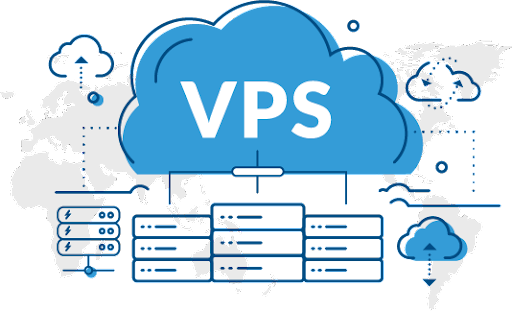
A website or application can quickly outgrow the server setup it started with. More visitors, heavier applications, and new features can all put extra pressure on available resources. A VPS/VDS gives developers, webmasters, and businesses more control over those resources and the freedom to adjust the server as the project changes.
This is where a VPS or VDS can be useful. You get your own virtual server resources and considerably more control over how the environment is set up. Location can be just as important as server specifications, especially when your users are spread across different countries
For projects that require virtual server resources in different geographic locations, HIP.Hosting provides VPS/VDS rental options that can be selected according to the technical and geographic needs of a project. Having a choice of server locations is particularly useful for businesses running regional websites, development environments, applications, monitoring systems, or services where network location and latency matter.
Server Location Can Matter
Server specifications are only one part of infrastructure planning. Geography can also influence performance.
When most visitors or application users are concentrated in a particular region, hosting the workload closer to them can help reduce network latency. The importance of this varies by application, but it becomes particularly noticeable with systems that make frequent requests between a client and server.
Location choice can therefore be useful for international companies operating separate regional services. A business serving customers in several markets may prefer to deploy different virtual servers according to where those users are located.
Developers can also use geographically distributed VPS/VDS instances for testing. This provides a practical way to examine how an application behaves when infrastructure is deployed in different regions.
Better Infrastructure for Growing Websites
Webmasters often begin thinking seriously about server resources when a website becomes more demanding. Increasing traffic is only one reason. WordPress installations with numerous plugins, large databases, e-commerce functionality, scheduled processes, or dynamic content can create substantial CPU and memory requirements even when visitor numbers appear moderate.
A VPS/VDS allows the webmaster to configure the software stack around those requirements.
Caching can be tuned according to the website. Database parameters can be adjusted. Background processes can be monitored. Unnecessary services can be disabled. Administrators can also examine resource usage to determine whether a slowdown originates from PHP workers, database queries, memory consumption, storage activity, or another component.
That visibility can be as valuable as additional computing power because optimization becomes based on measurable server behavior rather than guesswork.
Scalability Without Rebuilding the Entire Project
Infrastructure requirements rarely remain static.
Starting with an appropriately sized VPS/VDS provides a clearer path for growth. Resources can be planned around current requirements while leaving room to move to a more capable virtual server configuration when necessary.
Technical teams should still monitor resource utilization rather than simply increasing specifications whenever performance declines. High CPU usage could indicate inefficient code, while excessive memory consumption might point to a configuration problem. Scaling works best when it accompanies good application and server management.
Security With More Administrative Control
Greater server control also creates opportunities for a more deliberate security configuration.
Administrators can restrict unnecessary ports, configure firewall policies, control SSH access, manage user permissions, install security updates, and review system logs. Services that are not required by the application can be removed or disabled, reducing the number of unnecessary components running on the system.
However, control comes with responsibility. A VPS/VDS should not be treated as secure simply because it is isolated as a virtual server. Operating-system updates, strong authentication, careful permission management, backups, and ongoing monitoring remain essential.
For business-critical systems, organizations should establish a routine for patching and reviewing server activity rather than waiting for a security incident.
VPS/VDS for Business Applications
Businesses increasingly depend on applications that need to remain accessible beyond the office network. A virtual server can provide infrastructure for CRM-related tools, internal portals, databases, web applications, APIs, analytics systems, and custom business software.
The advantage is flexibility. An organization can select resources based on the application rather than purchasing more capacity than it currently needs.
It also allows technical teams to standardize deployment. Once a suitable server configuration has been established, the same approach can be used for additional projects or regional deployments.
For agencies, this can simplify the separation of different projects. Developers can keep workloads organized rather than placing unrelated applications within a single environment.
What to Consider Before Renting a VPS/VDS
Specifications should be evaluated against the actual workload. CPU capacity matters for processing-intensive applications, while RAM becomes particularly important for databases, caching, and applications that maintain multiple simultaneous processes. Storage requirements should consider not only available space but also expected database growth, logs, application files, and backups.
Location deserves similar consideration. Choosing a server simply because a particular region is available is less useful than identifying where the application’s users and connected systems are located.
Technical capability is another factor. The additional flexibility of a virtual server is most valuable when someone can properly administer it. Teams should have a clear plan for updates, access management, monitoring, backups, and recovery.